Recovery takes time, and comfort does not always correspond directly with tissue damage and healing. Feeling better is important, but it does not necessarily mean that movement, confidence and capacity have fully recovered.
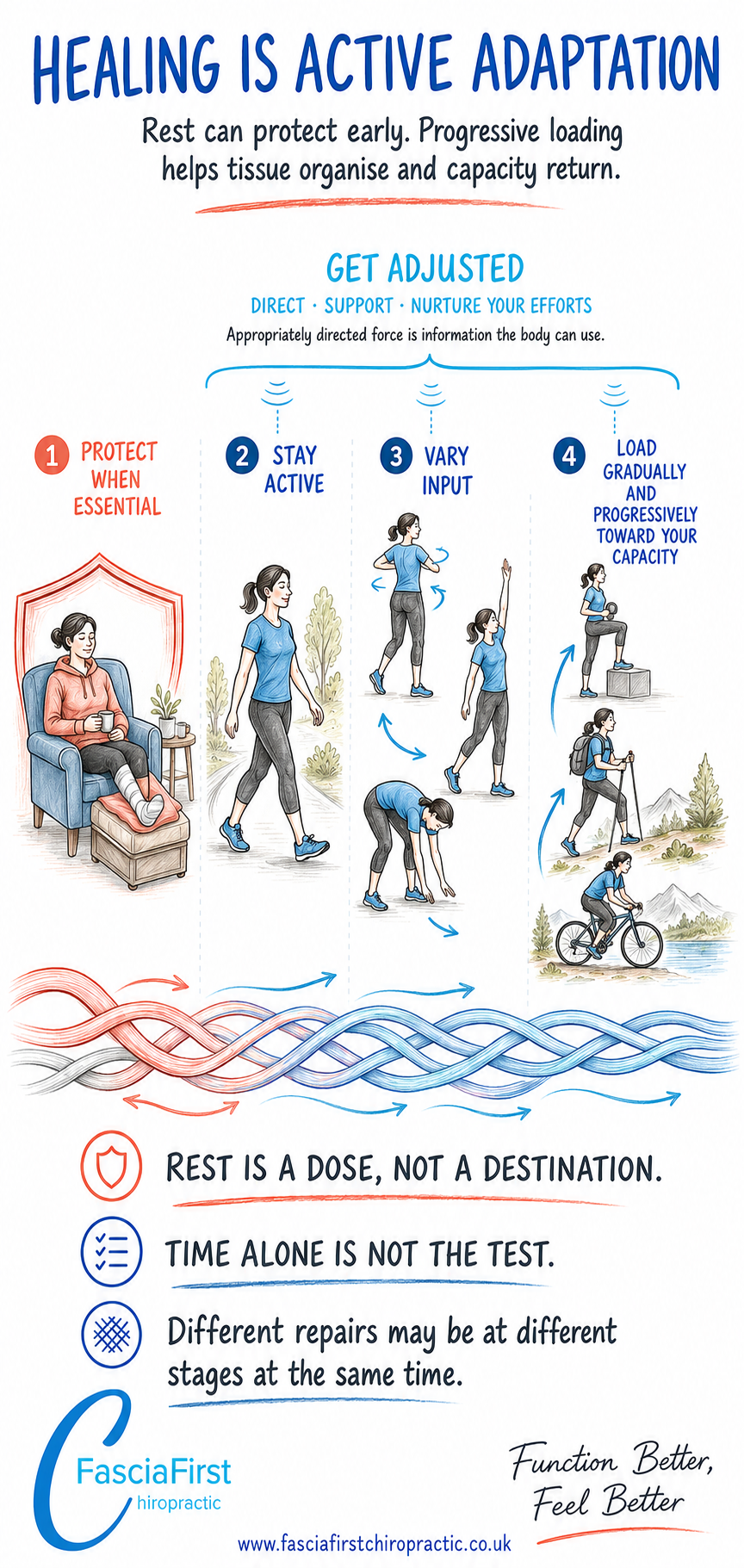
Ending care too early may leave less obvious difficulties unresolved, potentially increasing the likelihood of reoccurrence and further cost (1, 2). Many people require more than a few sessions to create meaningful and lasting change. For a straightforward occurrence, eight sessions can be considered a reasonable starting reference—not a fixed prescription. Your progress and response should determine what is appropriate.
Improving movement is not simply about adding something new. It may also involve letting go of older, less helpful patterns. This takes repetition and consistency, much like learning a skill or moving away from an established habit (1).
Chiropractic care is somewhat different from consciously training yourself. Much of the input is provided to parts of movement and bodily awareness that are normally automatic. As your body adapts, the interventions may also change. The intention is not to force change, but to help movement become more clearly sensed and more reliably recalled as a helpful pattern.
Movement provides the brain with essential sensory information. This information contributes to the organisation of automatic muscular activity and coordinated movement (3). Sensory nerves may also participate in processes associated with tissue repair, wouldn’t this be an exciting potential knock on effect for those receiving regular Chiropractic care (4)?
Better organisation can reduce unnecessary effort, allowing movement to become more consistent and sustainable. This may help the demands of life to be shared more widely through the body, rather than repeatedly overloading only a few areas, and may provide previously overloaded tissues with a better opportunity to recover.
References
- Kumfor F, Tu S. How our brain forgets information to make room for new memories. The Independent. 7 June 2015.
- Hides JA, Richardson CA, Jull GA. Multifidus muscle recovery is not automatic after resolution of acute, first-episode low back pain. Spine. 1996;21(23):2763–2769.
- Abraira VE, Ginty DD. The sensory neurons of touch. Neuron. 2013;79(4):618–639.
- Lu YZ et al. CGRP sensory neurons promote tissue healing via neutrophils and macrophages. Nature. 2024;628:604–611.